
BAPTISM
Baptism is the first sacrament we engage as Christians. In baptism, God marks us as his own and reveals his unrelenting commitment to his people through Jesus Christ. While baptism is often treated as a symbol of our commitment to God, the Bible says something different, it symbolizes God’s commitment to us.
AT REDEEMER, OUR PRACTICE OF BAPTISM MAY DIFFER FROM WHAT YOU’VE EXPERIENCED — WE BAPTIZE NEW BELIEVERS AND THE INFANTS OF AT LEAST ONE BELIEVING PARENT.
“Why would you baptize someone who can make a profession of faith, but then baptize an infant that can’t make a profession of faith?”
We recognize this practice may be new to you and it creates all sorts of questions. You get the new believers part, but not the baptizing infants part. The truth is, baptizing both has been the practice of the Church since it’s earliest days. At the same time, you won’t find any direct references of baptizing infants in the New Testament. So why then do we do it?
Below is an explanation of our tradition’s view of baptism and baptizing infants, that we also share with the historical traditions of the Church. Laid out below is a good start to understand our view more clearly.
But first, a few frequently asked questions.
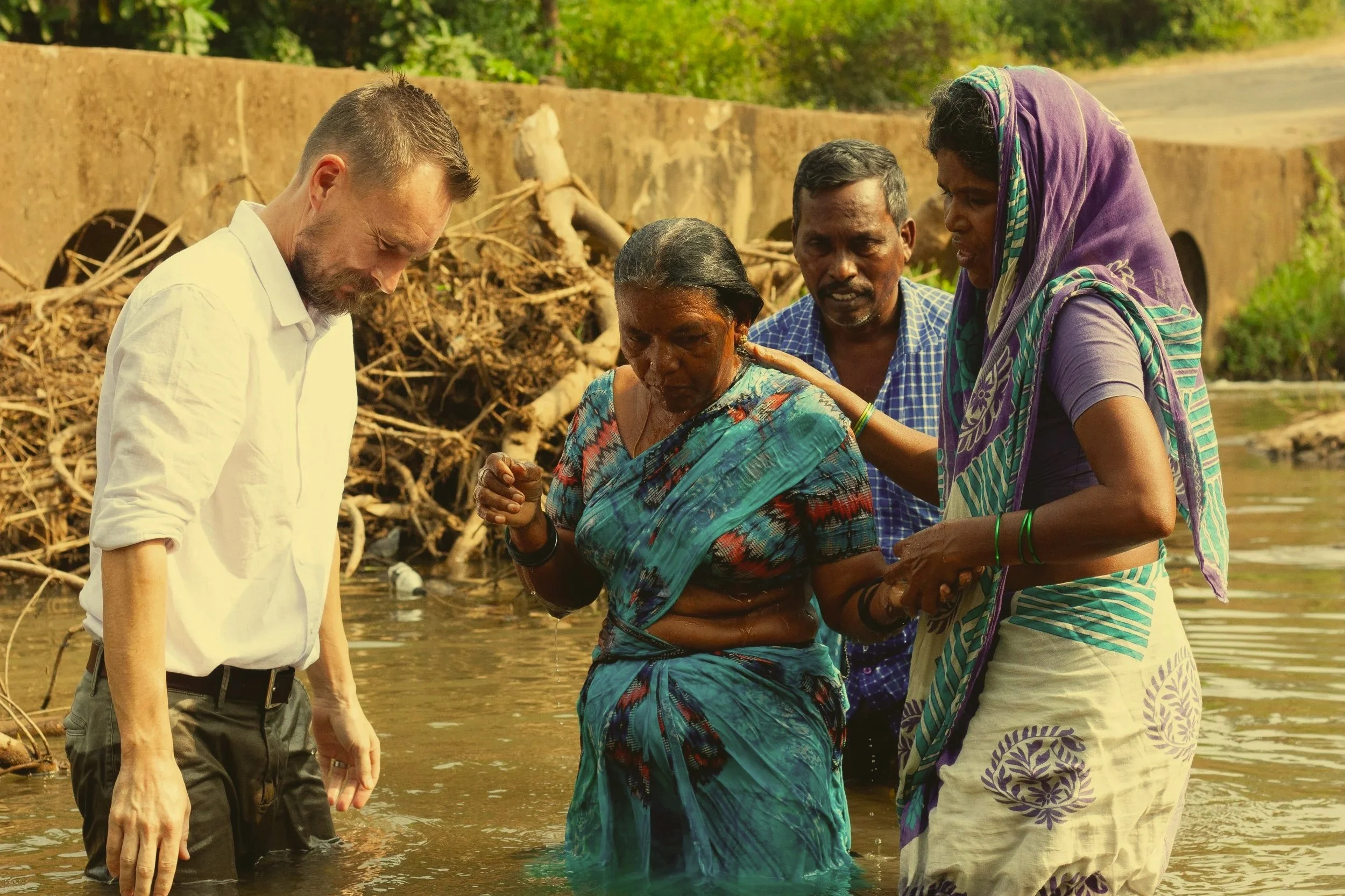
A ROADSIDE BAPTISM IN THE DEEP FOREST
Do you believe the infant is saved once they’re baptized?
We do not believe the child is saved just because they're baptized. Before any baptized child can come to the Lord’s Table they must give a profession of faith that understands their own sin and their need for a savior in Jesus Christ.
Do I have to believe in infant baptism to be a member ?
It is not required to believe in infant baptism to be a member at Redeemer. We recognize there is a plurality of practice within the Church, and while we hold our views sincere, you are allowed to hold your own.
So, what if I was baptized in a different tradition?
We recognize and affirm all baptisms that are done in the name of the Father, Son, and Holy Spirit. We believe this is what makes baptism valid, and not the traditions of men.
WHAT DOES BAPTISM ACTUALLY SYMBOLIZE? BAPTISM DOES NOT SYMBOLIZE OUR COMMITMENT TO GOD, IT IS A SYMBOL OF GOD’S COMMITMENT TO HIS PEOPLE.
Baptism symbolizes many things because Jesus Christ accomplished many things on our behalf. Baptism was instituted by Christ as a sacrament of the new covenant in him. While we receive baptism and certainly make real choices to follow him, baptism in and of itself is not a symbol of our commitment or faith.
ENTRANCE INTO THE VISIBLE CHURCH
Baptism has its roots in the Old Testament, because water has been a part of how God tells his story from the very beginning. The particular events that shape our understanding of baptism are the flood of Genesis 6 and the crossing of the Red Sea in Exodus 14. Both stories contain elements of salvation and judgment through the use of water. The same is true in baptism and those who “passed through the waters” were saved from the judgment in each respective event and it marked a new beginning. The exodus at the Red Sea marked a new beginning for Israel, because on the other side of the sea, they were a new people liberated by the power of God.
Baptism was ordained by Christ himself at the Great Commission where he sent his disciples into the world to “baptize them in the name of the Father, Son, and Holy Spirit” (Matthew 28:19). Baptism marks the entrance into the ‘visible church’ and being brought into the one body of Christian believers. This baptism is where they now live out their new identity that replaces any that previously existed. Baptism renders all other markers and distinguishing factors secondary (Galatians 3:27–28).
A SIGN AND SEAL
Baptism testifies to the truth of an enduring promise which God made, it’s the promise of redemption for all who place their trust in Christ alone. By the power of the Holy Spirit, attended by the words of institution that consecrate it apart from a bath, baptism is a ‘sign and seal of the covenant of grace.’ Baptism preaches to Christians in the same way that circumcision preached to the patriarchs and Old Testament believers – it is a sign and seal of the righteousness that is our by faith (Romans 4:11).
Paul makes a connection with baptism and circumcision in Colossians 2, and how baptism pictures salvation in a similar manner to circumcision. The cutting off of the flesh symbolized the removal of our sin by Christ, who was cut off in our place and made sin for us and cleansed in his resurrection. Baptism reflects the cutting off of the flesh, but also our being buried with Christ and raised to new life.
One of the most important aspects for modern Christians to consider is that baptism does not represent “our choice.” While personal choice is part of the process, as a symbol, baptism does not symbolize our faith, baptism symbolizes the work of Christ and the promises of God in him. Baptism cannot represent the faith of the person being baptized. There is virtually no way to know whether a person truly believes when they are baptized. Many are baptized yet never live the Christian life or fall away and never return. Therefore, baptism cannot symbolize what we do not know to be true. This is why baptism must be seen as a symbol and sign of God’s promises to us, not our promises to him, because God’s promises are true and never waiver.
INGRAFTING INTO JESUS CHRIST & NEW IDENTITY
Baptism points to our union with Christ. Paul says that we are buried with Christ in baptism and baptized into his death (Romans 6:1–4). Baptism is also a sign of judgment. The Hebrews passed through the Red Sea while the Egyptians did not. They went into the water but did not come out. The same waters of Israel’s salvation were the same waters of judgment for the Egyptians.
Similarly with baptism, it is a sign of judgment in that we were buried with Christ who was cut off from the land of the living for judgment for sin, but Christ was raised for our justification. This is what Paul says encourages us to walk in newness of life (Romans 6:4). By baptism we share in Christ’s death, but we must also share in his resurrection life by faith. To be baptized is to no longer live in ignorance. We cannot be baptized and then ignore the life and death reality of the cross. Therefore, while baptism communicates positively the benefits of the finished work of Christ, baptism also communicates the reality of judgment that awaits those who reject Christ.
In Galatians, Paul also speaks of those who are baptized in Christ have “put on Christ” and there is no longer Jew or Greek, slave or free, male or female (Galatians 3:27–28). Baptism renders all other identities and classifications as null and void, because the union with Christ that baptism represents is the new and only reality of one’s identity. After one is baptized, the entirety of their being is now defined by Christ.
REGENERATION & REMISSION OF SINS
Baptism symbolizes the removal of sin and the cleansing work of the Holy Spirit. The word ‘regeneration’ is from the Scriptures but also one that is carefully used by the divines. The Holy Spirit applies the resurrection life of Christ to us and raises us to spiritual life. But they intentionally do not use the word “resurrection” to describe this process, but that also involves a future event where we are bodily raised unto resurrection life. Therefore, regeneration refers to a “partial” resurrection in that our spirits are raised to new life, but we also await the redemption of our bodies on the last day.
Regeneration also references the language of new birth that Jesus uses with Nicodemus and the importance of being “born again” of water and Spirit. Nicodemus’s trouble with the concept was rooted in his understanding of his condition: why would he need to be born again if he was already alive?
Baptism therefore symbolizes this work of the Spirit where we hear God’s word, the Spirit raises us to new life in regeneration, we pass from spiritual death to spiritual life, and our sins are washed away by the blood of Christ. Both regeneration and remission of sins go hand-in-hand and are symbolized in baptism.
WALKING IN NEWNESS OF LIFE
Those baptized make real choices to follow Christ. Our choices matter and are important. In baptism we give our lives to God through Jesus Christ. Baptism is a symbol of the Christian life, where we turn away from evil and the power of darkness and we live our lives in full surrender unto God through Jesus Christ. Baptism is not just a picture of a one-time event, but an ongoing representation of how we are to live each and every day: we die and rise with Christ daily. We choose to lay aside every sin and every weight, and run the race in light of the victory of Christ.
Lastly, baptism is to be practiced until the end of the world. It is so bound to the mission of the church that as long as Christ has not yet returned, we baptize in the name of the Triune God.
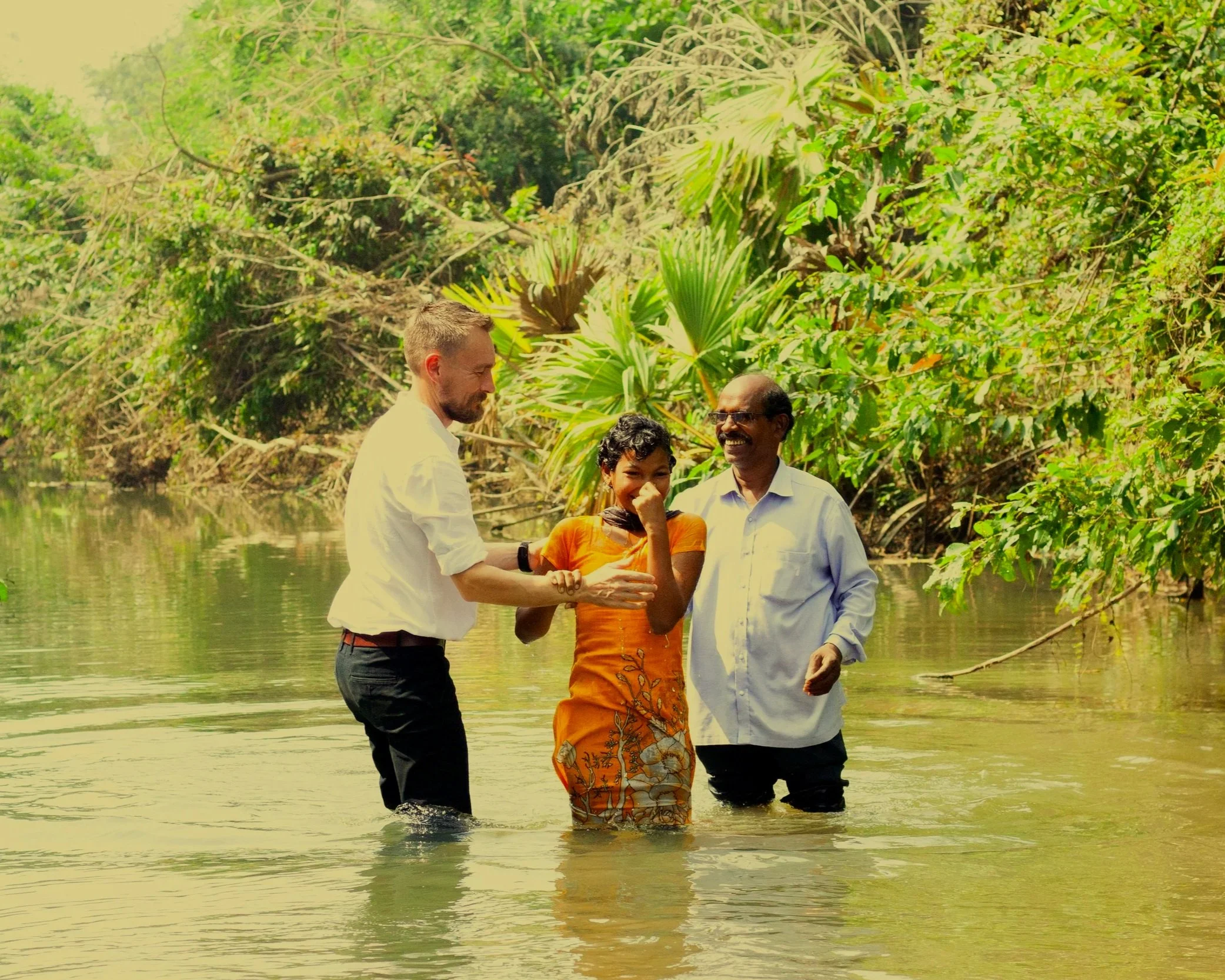

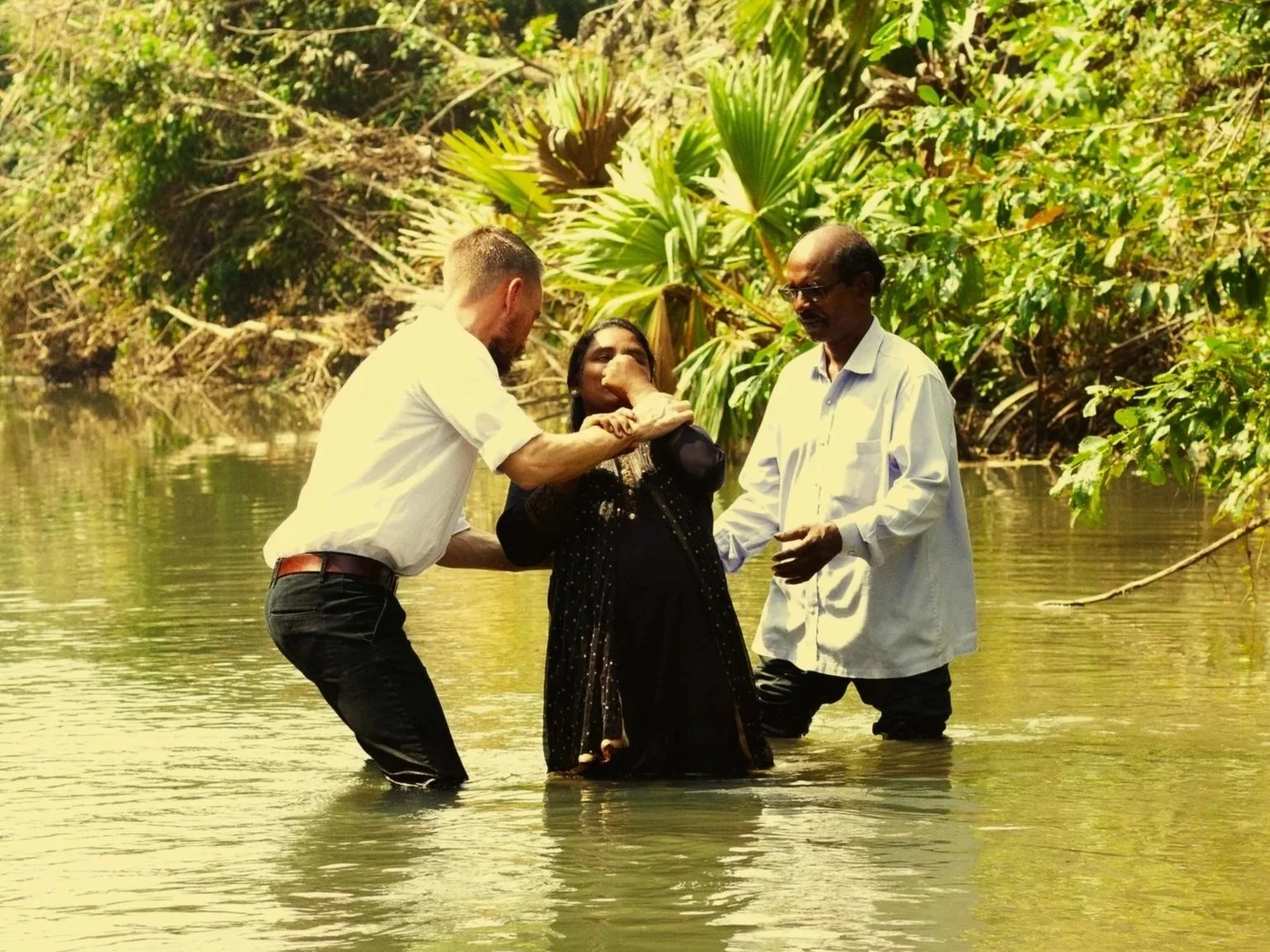
BAPTISM IS FOR THOSE WHO PROFESS FAITH IN AND OBEDIENCE TO CHRIST, BUT ALSO THE INFANTS OF AT LEAST ONE BELIEVING PARENT. TO REALLY UNDERSTAND BAPTISM, YOU CAN’T JUST LOOK AT THE NEW TESTAMENT — YOU HAVE TO TAKE THE WHOLE SCRIPTURES INTO VIEW.
No Christian denies that new believers should be baptized, but the baptism of infants is certainly disputed, yet its place and practice in the vast majority of the historical Church is inarguable. So the debate doesn’t center around its existence, but its necessity. So is there a Scriptural basis for baptizing infants. We certainly believe so.
BAPTIZING NEW BELIEVERS
In the book of Acts we see the basis of baptism in practice. Acts 2 specifically establishes the place of baptism as being after faith in Christ is professed. At the birth of the Church at Pentecost, it says the people were “cut to the heart” asked what they should do to be saved (Acts 2:37). Peter responded by commanding them to “repent and be baptized in the name of Jesus Christ” (Acts 2:38). It should also be noted that every instance of baptism in the New Testament is that of adults. There is not a single instance of a child or infant being baptized. The requirement of faith before baptism cannot be disputed, nor is it disputed, in any true Christian Church.
At this point, if one only uses specific proof texts like this one in Acts 2, then one easily arrives at the conclusion that new believers are to be baptized and that’s it. There is no reason to move beyond professions of faith because the New Testament lacks explicit cases of baptism preceding a profession of faith. This is where the Baptist view comes to resolve and goes no further. Therefore, a deeper exploration of the Scriptures is necessary to establish the importance and place of infant baptism. Believer’s baptism only is a view that’s merely established off the testimony of the New Testament and does not establish covenantal continuity with the Old Testament.
COVENANTAL CONTINUITY
What do we do with our children? The church is filled with children and understanding their place in the body of Christ is of utmost significance. We believe that children of believers are to receive the sacramental signs, as well as believers, because they are holy. In the Old Testament, there was a place for children in God’s covenant promises and we believe that continues in the New Testament era. This view comes from incorporating the Old Testament sacraments into shaping how we understand the New Testament sacraments, because the New Testament sacraments are sacraments of fulfillment, not simply replacement. Therefore, the view of infant baptism requires a broader reading of the Scriptures and deducing its practice in light of the full counsel of God.
Let’s take a deep dive. The place to begin developing a comprehensive view of infant baptism is not the household baptisms of Acts, as is often done. The best place to begin is when God first made his redemptive covenant with Abraham. And when he did, he gave Abraham a sign of that covenant that also included male infants — long before they had the capacity to believe.
Genesis 17 – The Sign of Circumcision
In Genesis 17, God gives the covenant sign to Abraham. The covenant God made was that he would give Abraham land, a promised seed, and he would be a blessing to all the families of the earth. The sign of this three-fold covenant promise was circumcision. But note that the sign of circumcision was not a sign of Abraham’s faith. It was not a sign of Abraham’s commitment to God, rather it was a sign of God’s commitment to Abraham.
God said, “As for you, you shall keep my covenant, you and your offspring after you throughout their generations. This is my covenant, which you shall keep, between me and you and your offspring after you: Every male among you shall be circumcised. He who is eight days old among you shall be circumcised. So shall my covenant be in your flesh an everlasting covenant” (Genesis 17:9–10, 12, 13b).
There are a number of important points to note from these verses. First, is that this is God’s covenant with Abraham, not Abraham’s covenant with God. Therefore, the sign of the covenant, circumcision, was a sign of God’s commitment and covenant fidelity to Abraham and his children. Abraham was also to keep this covenant by obeying the command of the Lord and receiving the sign of God’s covenant promises. He would also give the sign of those promises to his children, and they would continue this practice throughout their generations. Faith is certainly involved in circumcision, but it was a sign of God’s covenant, not a sign of their personal belief. Additionally, a baby eight days old could not believe in God’s promises. The sign transcended any single person’s faith, but the sign of circumcision was received by faith as one entered into relationship with God as his covenant people.
Secondly, this is an everlasting covenant. There is no expiration date on these promises, only on the sign. We also must account for the fact that the promise to Abraham was not just for his biological family. God changed Abraham’s name and said, “Behold, I have made you the father of a multitude of nations” (Genesis 17:5). So even here, we see that these promises were not simply by natural generation, but would ultimately be fulfilled in a global inheritance of these promises – “in you all the families of the earth shall be blessed” (Genesis 12:3).
In light of the everlasting nature of the covenant, God also said, “I will establish my covenant between me and you and your offspring after you throughout their generations for an everlasting covenant, to be God to you and to your offspring after you” (Genesis 17:7). Therefore, we see that this covenant is everlasting, includes all the families of the earth, and is established by God.
The scope of God’s covenant with Abraham is familial, but also extended beyond his biological family. Paul states in Galatians that through Christ, “the blessing of Abraham might come to the Gentiles” (Galatians 3:14). Even within God’s promises to Abraham, the Gentiles were included in those who would receive the blessing of God’s covenant. Therefore, the nature of the covenant does not have an expiration date, but rather it is fulfilled in Jesus Christ. He did not come to put an end to the Abrahamic promises, but to see them brought to fulfillment so that all the families of the earth might be blessed.
This then places the covenant community inside a larger framework. The Abrahamic covenant is still in play and fulfilled in Christ, but the very nature of this covenant is familial. God didn’t just mark individuals, he marked families, where children would grow into the faith and understand the sign that was placed upon them.
The reason circumcision was applied to boys and not to girls, was not because females weren’t included in God’s covenant promises. They most certainly were, and equals in inheritance in Christ. But the sign of circumcision had a deeper meaning. It was applied to male babies, because God was marking all current families, but also marking all future families that would exist. He was marking the head of the households of God’s people and signifying that all of the families belonged to him, even before they came into existence.
God’s covenant with Abraham allows us to establish the familial framework of God’s promises and the distribution of the sign that symbolizes them. If one merely looks at the New Testament baptisms, then they will simply see an individualistic participation where one is only baptized upon their profession, yet this would be entirely new in development of the faith. But when the Old Testament promises are included in how one sees the New Testament and what Christ fulfilled, this creates a place for the role of the family in how God marks his covenant people. The family is God’s primary means of discipleship.
Colossians 2 – The Sign of Baptism
In Colossians 2, Paul speaks of the sign of circumcision being fulfilled in Christ and no longer necessary. In Christ, both men and women do undergo circumcision because it’s a circumcision of the heart – “a circumcision made without hands” (Colossians 2:11). The body of flesh is cut away by the circumcision of Jesus. Circumcision in the Old Testament signified this very spiritual reality that was to take place in the life of God’s people, they were to circumcise their hearts and put away what is evil within them (Deuteronomy 10:16). In Christ this circumcision “made without hands” has occurred by the work of the Spirit – what is dead has been cut away.
But Christ has done more than just cut off what is dead within us. He has raised us to new life in him. Paul then speaks of the sign of the new covenant in Christ, where we are “buried with him in baptism” (Colossians 2:12). We also are raised with him through faith in the powerful working of God who raised Christ from the dead. Therefore, in Christ we share in his resurrection life, because we have passed through the waters of judgment and been cleansed from all unrighteousness and now stand alive and righteous before God.
Acts 2 – From Circumcision to Baptism
At Pentecost, the Spirit descended and the people gathered from all over the region heard the gospel preached in their very own language (a reversal of Babel). But when you take a closer look you see a few things. You see the continuation, or fulfillment, of the Abrahamic covenant in Christ. But at Pentecost, you also see the fulfillment of circumcision by the ministry of the Spirit, and the institution of a new covenant sign according to the command of Christ in the Great Commission.
After Peter preached the gospel to the people gathered, we’re told that when they “heard this they were cut to the heart” (Acts 2:37). It’s through the preaching of the word and the gift (ministry) of the Holy Spirit that the fulfillment of the Old Testament sign of circumcision is fulfilled. The circumcision of the heart it signified is now complete by the Spirit in a “circumcision made without hands” (Colossians 2:11).
The people then ask Peter what they should do. Peter’s response is the institution of the new covenantal sign of baptism: “Repent and be baptized every one of you in the name of Jesus Christ for the forgiveness of sins” (Acts 2:38). The entrance of these converts into the new community of faith was marked by baptism, which signifies the dying and rising with Christ and the removal of sins and cutting away the body of death (circumcision). This new life in Christ required a new sign that symbolized the fullness of Christ’s work, not to just cut away the body of death, but also being raised to new life in him.
Therefore, in Acts 2 we see the intersection of the Old Testament sign with the New Testament sign. Circumcision is fulfilled in the regenerating work of the Spirit, where the circumcision of the heart is accomplished in the believer. This new covenant in Christ is one of fulfillment, where all the Old Testament covenants converge upon him in a new covenant with a new sign.
INFANT BAPTISM
The question of infants being baptized is rooted in taking the entire Scriptures and covenant history of Israel into account. The new covenant is not new in that it is detached from previous covenants. Rather, the previous covenants are fulfilled in Christ and incorporated into the new covenant he made with his people.
The Everlasting Covenant – “For you and for your children”
The covenant with Abraham as mentioned above, is an everlasting covenant. It did not expire or get replaced because of Jesus, it is fulfilled in Jesus. But the sign of this everlasting covenant with Abraham was applied to male infants because it is a familial covenant. Therefore, if the Abrahamic covenant is fulfilled in Christ, that does not mean it is any less of a familial covenant. God still marks what belongs to him and sets apart his families.
In Acts 2, when Peter tells the people to be baptized, he uses the language of the Abrahamic covenant. He says, “For the promise is for you and for your children.” Peter is invoking the language of God’s promise to Abraham so that his hearers would understand the fulfillment of those promises in Christ. Therefore, baptism wasn’t just for the new converts that day, but for their households, for their families, just as much as the Abrahamic covenant was for their families.
The Expansion of the Covenant
Additionally, there is an expansion of the new covenant in Christ that broadens what was more narrow in the Old Testament sacraments.
First, with the Abrahamic covenant being fulfilled in Christ, it unlocked the promises of God for the whole world. Christ is what allowed those promises to be “a blessing to all the families of the earth” with the offer of salvation. There is an explicit expansion of the people of God to now include people from every tribe, tongue, and nation. This is why Peter said at the end of Acts 2, that this promise in Christ is “for all who are far off” (Acts 39). No one is excluded and all are invited to come and believe in the Lord Jesus Christ.
Secondly, circumcision was only applied to infant males. But Peter says these promises are for you and for your children. He uses Abrahamic covenant language, but there is an expansion in the new covenant to whom the sign of the covenant is applied – baptism is for males and females.
The conclusion to draw from this expansion is to realize how Christ broadens what was previously narrow in all its dimensions. Therefore, to no longer include covenant children at all would be a contraction compared to the Old Testament. They would be excluded from a covenant that is inherently familial and always included them. Believer Baptism only, is problematic in that it expands the covenant and baptizes females, but it contracts it at the same time and excludes children from those who should receive it.
In conclusion, Infant Baptism seeks to embrace the familial continuity of the Old Testament, the commitment of God to his people evidenced in a sign, and the expansive work of Christ to all men, women, tribe, tongue, and nation.